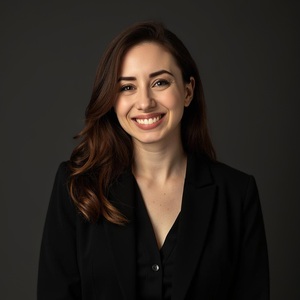
Season 01, Episode 01 – Pack In // Who I Am And Why This Guide

BEFORE YOU LISTEN
Content notes
The CSA Survival Guide is an autobiographical audio series, highlighting lived experiences at the intersection of intergenerational trauma, childhood sexual abuse, and psychedelic healing. Please note, The CSA Survival Guide is intended for mature audiences, as it discusses areas of life, and experiences, that may be considered intense, emotional, or socially taboo.
These experiences may include:
• Abortion
• Addiction
• Attempted suicide
• Bullying and/or social isolation
• Chronic illness
• Dating abuse and/or intimate partner violence
• Disordered eating
• Emotional, financial, physical, psychological and/or sexual abuse
• Grooming of minors
• Homicidal ideation
• Incarceration
• Medical trauma
• Mental illness
• Near-death experience
• Pregnancy loss
• Self-harm and/or self-mutilation
• Substance use
• Suicidal ideation
content warnings for this episode INCLUDE:
• Attempted suicide
• Childhood sexual abuse
• Incest
• Rape
• Self-harm
• Sodomy
• Suicidal ideation
Please listen thoughtfully, with respect to your own boundaries.
THE LAY OF THE LAND
About this episode
In our first episode, I track the themes and through lines of my life before August 9th, 2019. My journal entry opens nearly a year later, on my first (of many) 5,000-mile flights to Maui, Hawaii. I outline my lived experiences (as an educator, CSA survivor, and closeted creative), explain the ethos and positioning of the show (female-led, mission-driven, and independent), and begin to carve out the plan for future episodes, including breaking down the show’s segments (Field Notes, Compass Points, and The Path Forward).
VANTAGE POINT
Personal perspective
Newly twenty-eight, I often call this period of my life “God clearing the table.” From August 9th, 2019, to August 11th, 2020 — my world (both inner and outer) became utterly unrecognizable. In August of 2019, I began having dreams of my most severe experience of childhood sexual assault, not knowing they were more than dreams — but remembering them as being ever-present in my early childhood.
Night terrors, excruciating physical pain, and the inability to keep down food led to significant weight loss. I began to lose myself — leaning on alcohol in an attempt to calm the waves of unease rippling through me. I started writing down what I’d seen, in a kind of fever-dream bedside journal — my intuition pulling me by the navel, telling me to jot it down, no matter how messy or disjointed. That same month, I met my future lover and partner, Damian, through an email sent to the wrong place — and got engaged (to my previous, now primary) partner, Michael. By that October, the dreams had become nightly occurrences, eating felt like a chore, and I began waking up before work with an unshakable terror — a psychic paralysis leading to conspicuous absences, and a whirl of never-ending shame. Later that month, on my way to visit family, I got into a massive car accident, leading to a near-death experience. As the spiderweb windshield crack spread in slow motion, I began recalling isolated details of childhood sexual abuse throughout my lifespan, unaware of what the universe was showing me. I was left deeply shaken, with the distinct knowledge that if I continued down the prescribed path I’d originally intended, I wouldn’t survive long.
In December, Damian and I met for the first time. During our second night together, I recalled the assault in full, as well as the identity of the perpetrator. The experience simultaneously saved and shattered my life. The next morning, after sharing the information with Michael, the three of us began to make a plan to ensure my safety and survival — only to be thrust into a previously planned family trip scheduled for the holidays. Damian returned to Hawaii, and Michael and I made a pact to make it through, together.
Directly before the official beginning of the COVID-19 pandemic, my mother was hospitalized over a number of weeks, with a severe diaphragmatic illness, pulmonary embolism, and uncontrolled bleeding. I was immediately confronted with two truths — the reality that my mother might die before I’d be able to disclose the truth to her, and the fact that I’d need to stay in close proximity to my abuser to ensure her safety and continuous care. In order to save her, I’d have to put my pain away, and give the best performance of my life. I left my career behind, and began her rehabilitation — all under my abuser’s watchful eye. After seven months, my mother stabilized — learning to walk, talk, and function again. I was then forced to contend with the damage, not just of the last year, but of the last twenty-five. In the wake of my newfound awareness, my body, mind, and soul began crying out — blinding migraines and pressure headaches, replays of the assault on loop, thoughts and plans of killing my abuser, more flashbacks, worsening dissociation, and suicidal ideation. I was dangerously thin — wild, hungry, and on a precipice.
So, on August 11th, 2020, under the false premise of a meditation retreat, I left my former life to stay with Damian — no return ticket. I made the choice to save my own life, at any cost. Unfortunately for me, that meant confronting what I’d dutifully spent my entire life avoiding — surrendering control — through the conscious use of psychedelics.
THE GROUND WE COVER
Episode guide + timestamps
Journal Entry (00:00 — 00:00)
Intro + Disclaimers (00:00 — 00:00)
Specific Content + Episode Warnings (00:00 — 00:00)
Legal + Resources (00:00 — 00:00)
Field Notes, Compass Points, and The Path Forward (00:00 — 00:00)
Who I Am + Why This Guide (00:00 — 00:00)
Moment of Reflection — Call for Collaborators, Donations, and Feedback (00:00 — 00:00)
Ethos + Commitment to our Listeners (00:00 — 00:00)
Episode Themes + Future Directions (00:00 — 00:00)
Closing — Creative Support, Contributors, and How to Contact Us (00:00 — 00:00)
Call for Support + Sign Off (00:00 — 00:00)
REFLECTION + INTEGRATION
What to take with you
This episode is a meditation on how life can change in an instant — the lightning strike when we begin to honor who, and what, we are — no more, and no less. How the universe conspires to aid us, the moment we choose to take on the inimitable task of living a life beyond our life.
It’s also an ouroboros — the completion of one cycle, and the simultaneous start of another, through the same opening. Though sexual violence was my originating wound, it was the life-giving love of another that allowed me access to the memory of my abuse — and to begin a seven-year process of personal reckoning and soul retrieval — with both men by my side.
When I reflect on this period of my life (from twenty-seven to twenty-eight) — torturous and turbulent, tumultuous and turbid — I remember the questions. The ones I asked myself at 3:00 a.m., eyes fixed on the alarm clock. The ones I heard in my mind, sobbing and shaking in the shower, as Michael fed me whatever he could, from a teaspoon. And the ones reverberating in the silence of that plane.
Who do we become when we are forced to bear more than we believe we can bear? Do we run? Do we fold? Or do we resolve to make the outcome our responsibility?
What is life, if not a great invitation? And who am I to turn it away?
Who is a stranger, who isn’t really a stranger — and what are they capable of, if we allow them to take a place in our lives — as messengers of the great mystery?
YOUR PERSONAL TRAIL KIT
Episode downloadable
Each episode includes a resource that can help you pause, orient, and carry what may be useful as you move through the show. Feel free to download it now, save it for later, or share it with someone you trust — these Trail Kits are for you.
FOR THOSE SEEKING SUPPORT
Trauma-informed resources
These episodes can evoke deep and unexpected emotions. If listening to this episode leaves you shaken, activated, or overwhelmed, know you do not have to hold that alone. Please note, the podcast is not a crisis service, and I can’t offer individual support here — but there are people and organizations whose purpose is to help you through moments like this.
IF YOU ARE IN IMMEDIATE DANGER, OR ARE EXPERIENCING SUICIDAL IDEATION:
Please contact emergency services in your area or a trusted local crisis line right away.
If you’re not sure where to start, you can search for a crisis line in your country or region, or use one of the resources listed below.
IF YOU NEED TO TALK TO SOMEONE SOON:
988 Suicide + Crisis Lifeline — Call 988
988 Crisis Text Line — Text HOME to 741741
211 Mental Health Resource + Referral Service — Call 211
FOR ONGOING, SPECIFIC, OR TRAUMA-INFORMED SUPPORT:
NAMI Helpline — Call 1-800-950-6264 (NAMI)
NAMI Text Line — Text NAMI to 62640
Warmline.org — Visit online via www.warmline.org
If you are currently in crisis, press pause on the episode and prioritize your safety first.
TRANSCRIPT + SHOW NOTES
A detailed breakdown
For accessibility, clarity, and those who prefer to read rather than listen, the full transcript is available below. Light edits have been made for flow and privacy. Feel free to download a PDF to take with you.
LINKS + MENTIONS FROM THIS EPISODE
Media to further explore
A curated list of everything cited or discussed in this episode: readings, resources, and points of reference.
concepts + terms:
Psychedelics — Psychedelics are compounds that alter consciousness by acting on serotonin receptors in the brain. The term psychedelic, from the Greek for mind manifesting, refers to the drugs’ subjective effects and was first proposed by Humphry Osmond in 1956. Other terms have been used to emphasize different aspects of the psychological experiences produced by various related compounds, including hallucinogens (perceptual), entheogens (spiritual), and empathogens or entactogens (social/emotional).
practices + Tools:
N/A
PEOPLE:
Damian Nyman* — Harvard trained Psychotherapist, Ethics Researcher, and Meditation Teacher
(Some names have been changed to protect anonymity)
Michael Zeman — Private Wealth Manager
Tim Ferriss — Author, Podcaster, Psychedelic Advocate and CSA Survivor
PLACES:
Maui, Hawaii
Wellington, Florida
Literature (books, essays, articles):
Adyashanti — The End of Your World (2008)
Bell Hooks — All About Love (2000)
Elisabeth Kübler-Ross — On Death and Dying (1969)
Erich Fromm — The Art of Loving (1956)
John O’Donahue — Anam Cara (1997)
Julian Jaynes — The Origin of Consciousness in the Breakdown of the Bicameral Mind (1976)
Thich Nhat Hanh — True Love (2004)
(Books above are linked to Thriftbooks. It’s my favorite way to buy books second-hand, and better for the planet!)
scientific research + Reports:
N/A
podcasts, films + Media:
Adyashanti — On Awakening Through Redemptive Love (2014)
Alan Watts — A Coincidence of Opposites (1965)
David Whyte — On Modern Life and Being Lost (1994)
Louise Glück — The Red Poppy (2016)
Paul Tillich — On The Nature of Divinity (1959)
Tim Ferris — On Healing from Childhood Abuse (2020)
Toni Morrison — On Trauma, Survival, and Finding Meaning (2001)
CONSCIOUS COLLABORATIONS
Seeking thoughtful partnerships
We don’t have sponsors for this season. We’re intentionally taking our time looking for sponsors — individuals, organizations, and companies — whose work aligns with our ethos of care, integrity, and survivor-centered support.
If you’re interested in collaborating, please contact us.
IMPORTANT NOTES + DISCLAIMERS
What the show is + is not
This podcast shares personal stories and reflections about childhood sexual abuse and its impact over a lifetime. It is created for adults and mature listeners. Nothing you hear here is medical, psychiatric, or legal advice. Listening to this show does not create a professional relationship of any kind between you and me. All opinions, views, and statements are my own, and do not reflect the views of any corporate entity — including Mokwa.org, Mokwa Creative Company, Mokwa House, or any other company connected to Mokwa LLC.
If you need treatment, medical guidance, or legal advice, please reach out to a qualified professional in your area.
NOT A SUBSTITUTE FOR THERAPY OR CRISIS SUPPORT:
This podcast can be part of your healing ecosystem, but it is not therapy, and it is not a crisis service.
I can’t assess risk, keep you safe in an emergency, or tell you what to do in a crisis.
If you are in immediate danger or feel you might hurt yourself or someone else, please contact local emergency services or a trusted crisis line right away, before anything else.
You’ll find a list of support resources in the For Those Seeking Support section above.
STORIES, DETAILS, AND PRIVACY:
The stories shared on The CSA Survival Guide are based on real experiences. To protect privacy and safety:
Names and identifying details may be changed, edited, or combined.
Timelines and locations may be slightly adjusted, as long as it does not alter the emotional truth of the story.
All individuals who appear on the show have given informed consent to share their experiences in this format. Even so, no singular story can capture the whole of a person’s life or healing. Based on previously established mutual agreement, no specific individual will be identified by name in relation to my experiences of childhood sexual abuse — including by family identifier (e.g., “brother”).
LEGAL AND LOCATION NOTES:
From time to time, this podcast may mention specific therapeutic modalities, medications, or substances — including psychedelic-assisted work.
Any mention is for information and storytelling only, not a recommendation or instruction.
Laws and regulations vary widely by country, state, and region, and they also change over time.
It is your responsibility to know and follow the laws where you live, and to consult qualified professionals before making decisions about your health or safety.
Please do not interpret any part of the show as encouragement to break the law, use any substance unsafely, or move forward without proper precautions and support.
REACH OUT TO THE SHOW
Share your story
If this episode resonates with you, you’re welcome to reach out.
One of the core intentions of this show is collective healing — naming what happened to us as children, honoring the truth of our lived experiences, and recognizing ourselves in one another with clarity and compassion. If you choose to share your story, know it will be treated with respect.
Every message is held in confidence, and every story is received as something precious, not sensational. Whether or not your experience becomes part of the podcast, your voice matters. We can heal in solitude, but we also heal in solidarity. This space exists so survivors don’t have to feel alone in the long, quiet work of making sense of what happened and who we’re becoming.
If you feel called to share your story in a future season of the podcast, I want you to know that there’s space for you here — on your terms, in your timing, and with as much or as little detail as you’d like. You are never required to be polished, certain, or “ready” in any performative way. Your lived experience is enough.
For many survivors, telling their story — slowly, deliberately, and with support — can be an act of reclamation. Our first season was exactly that, for me. It can also be a way of contributing to our collective healing — one voice illuminating what so many others have lived, naming the truth in ways that make the world more honest, and more humane.
If you choose to reach out, here’s what you can expect:
You can share as much or as little as you’d like in your initial message. Some survivors write a few sentences about the broad shape of their experience. Others write several paragraphs. Some simply say, “I think I’m ready to talk about this,” and that is more than enough.
You might include:
• The general nature of your experience (without needing to relive anything in detail).
• The part of your story you feel drawn to explore or articulate.
• The themes you believe might help other survivors feel seen, validated, or less alone.
• Where you are now — emotionally, relationally, or spiritually — relative to the events themselves.
• Anything you’re certain you don’t want to discuss publicly (this is just as important as what you do).
• You are fully in charge of what you disclose, and your boundaries will always be honored.
Why Your Story Matters:
Every survivor’s story is distinct, but the emotions, patterns, and questions underneath often echo across lives. When you share your experience, you’re not just speaking into a microphone — you’re offering language, validation, and companionship to someone who has carried a very similar pain.
Stories help us see ourselves more clearly.
Stories open doors.
Stories remind us we are not what happened to us — we are so much more.
Your story, in whatever form you choose to share it, expands collective understanding of what CSA looks like, how it shapes us, and how we keep finding our way forward.
Where to Write:
If you feel ready, you can reach out to —
Your message will be received with compassion, confidentiality, and zero expectations.
SUPPORT OUR WORK
Ways to connect
This podcast is part of a much larger body of work — writing, service, survivor advocacy, and creative projects that take time, care, and community to sustain. If this episode meant something to you, there are a few ways to support our work and stay connected to what’s unfolding here.
Subscribe to Mokwa’s Meditations:
Our seasonal newsletter with reflections and resources for survivors and the quietly curious.
Share the Show:
If there’s someone in your life who might feel seen or supported by these conversations, passing an episode along makes a real difference.
Explore our offerings:
Consultations, resources, and creative projects — ever evolving as our community grows. Take a look at our Support Services, Empathetic Education Hub, and Resource Library pages to learn more.
There is no obligation to support us in any particular way. Your attention, presence, and willingness to engage with difficult stories already makes all the difference.
EPISODE CREDITS
Yes, it’s a one-woman show (with a little help from my friends)
This podcast is a commitment to a new kind of revelatory storytelling — written, shaped, and produced by me, Christina Mokwa — through the companies I’ve founded, Mokwa.org and Mokwa Creative Company. It exists because of my lived experiences and creative discipline, and also because of the steady presence of supportive women whose insight, generosity, and quiet brilliance helped me realize my multi-year vision.
Hosted, written, and produced by:
Christina Mokwa
Story by:
Christina Mokwa
Production Support:
Emily Geraghty
Audio Mixing, Mastering, AND Editing:
Music AND Sound Design:
Original score: Christina Mokwa + Benji Antonio
Performed by: Benji Antonio
Cover Art AND Branding:
Katherine Alt + Christina Mokwa
Creative direction:
Christina Mokwa
Special thanks:
*Podcast produced by Christina Mokwa — © 2026 Christina Mokwa/Mokwa LLC/Mokwa Creative Company